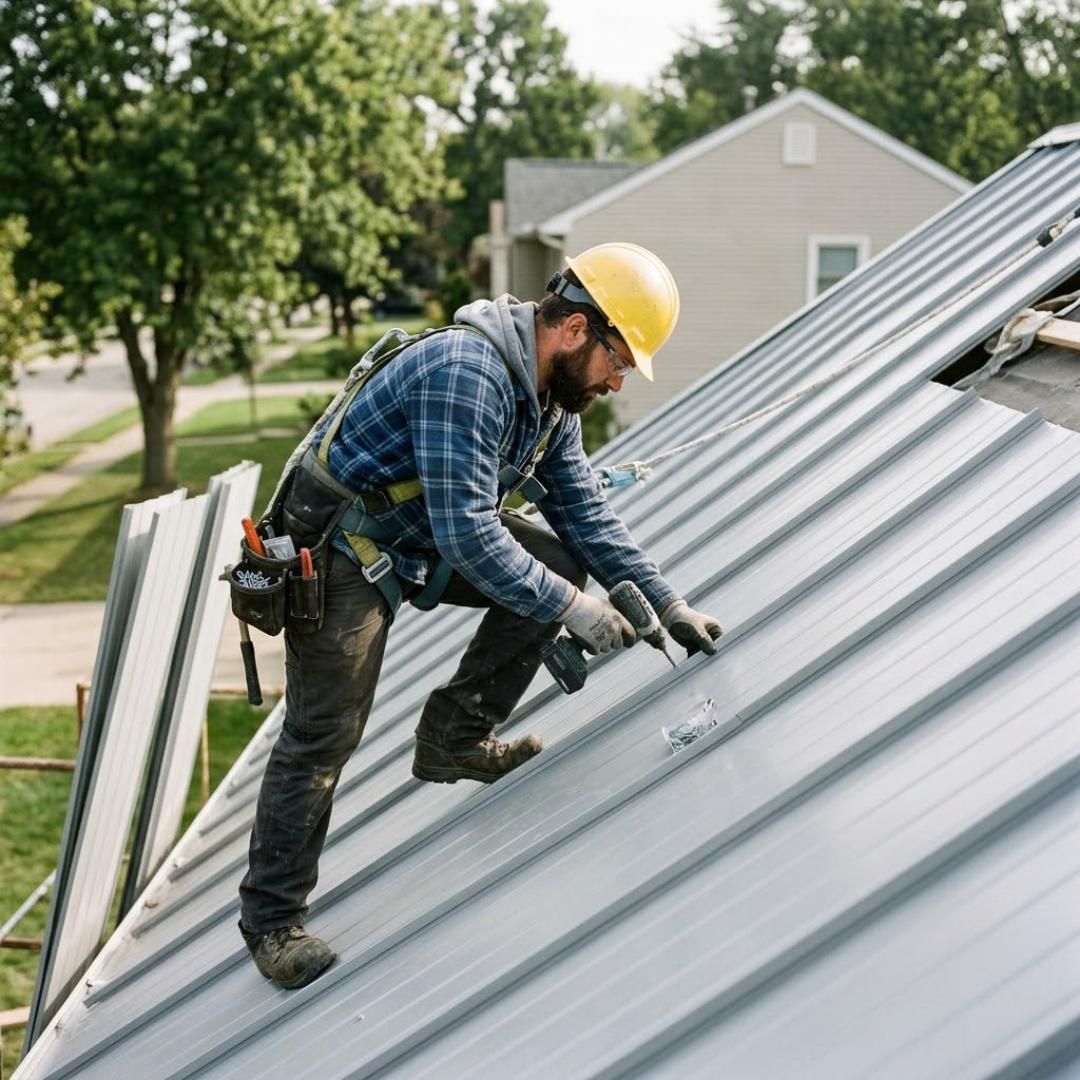
Metal Roofing · Missoula, MT
Metal Roof Installation in Missoula, MT
Professional metal roof installation for homes and businesses in Missoula, MT, using durable materials designed for long-term performance in Montana weather. New builds, additions, shops, barns and cabins, detailed for snow, wind and freeze-thaw.
What Goes Into a Metal Roof Installation
A metal roof is only as good as what's under it and around its edges. The panels get the attention, but most of the work that decides whether a roof lasts 15 years or 50 happens before the first panel goes on, and in the trim at the end.
Installation covers new roofs on new construction and additions, and first-time metal roofs on buildings that have never had one: a new shop, a garage, a barn, a cabin, a porch or a lean-to. If there's an old roof to remove first, that's a metal roof replacement, and the steps are the same once the deck is clear.
In Western Montana, the installation also has to plan for snow. That means thinking about where snow will slide, what it will land on, and whether the roof needs guards, before the roof is on rather than after the first winter.
What's Included
Before the panels
- An on-site look, measurements and an itemized written quote
- Help choosing the profile, gauge and color for the building
- A check of the roof deck or framing, with repairs noted in the quote if they're needed
The roof system
- High-temperature underlayment rated for use under metal
- Ice-and-water membrane at the eaves, valleys and around penetrations
- Panels, fastened to the spacing the profile calls for
- Flashing at walls, chimneys, vents and skylights, plus drip edge, rake, ridge and trim
- Ridge ventilation where the building needs it
- Snow guards where sliding snow would land on a door, deck, walkway or driveway
After
- Cleanup of the site, including metal scraps and screws
- A walk-through of the finished roof, and the manufacturer's paperwork on the panels and finish
From Deck to Ridge: The Layers of a Metal Roof
| Layer | What it does | Why it matters here |
|---|---|---|
| Deck or purlins | The structure the roof fastens to. Solid sheathing on homes; purlins or open framing on many shops and barns. | Soft or rotten decking has to be fixed first. Metal won't hide it. |
| Underlayment | A high-temperature synthetic layer across the whole deck. | Metal gets hot in summer sun. Standard felt can break down under it. |
| Ice-and-water membrane | A self-sealing membrane at eaves, valleys and penetrations. | Freeze-thaw and ice at the eaves are where water tries to back up. |
| Panels | Standing seam or exposed-fastener panels, run from eave to ridge. | The profile decides how the roof looks, sheds snow and ages. |
| Clips or fasteners | Concealed clips on standing seam; gasketed screws through the face on exposed-fastener panels. | Metal expands and contracts with temperature. The fastening has to allow for it. |
| Flashing and trim | Metal and sealant at every edge, wall, valley and penetration. | Most metal roof leaks start at a flashing detail, not a panel. |
| Ridge vent and closures | Lets attic air out at the top while keeping snow, insects and birds out of the panel ribs. | A well-vented attic helps prevent ice dams and condensation. |
| Snow guards | Clamps or brackets that hold snow on the roof. | Keeps slabs of snow off entries, decks and vehicles. |
Standing seam or exposed fastener?
For most homes, standing seam is the first choice: hidden fasteners, clean lines and panels that move freely as they heat and cool. For shops, barns, garages and cabins, corrugated and other exposed-fastener panels are a strong, lower-cost roof. We'll tell you which one fits the building and quote both if you'd like to compare.
What It Costs
Missoula-area cost guides put an installed metal roof at about $6 to $12 per square foot, with exposed-fastener panels at the low end and standing seam at the high end (Homeyou). On a new building, there's no tear-off, so the price comes down to:
- Profile and gauge. Standing seam costs more than exposed-fastener panels. Heavier gauges and premium finishes add cost.
- Roof size and pitch. Steeper roofs take more time and safety setup.
- Complexity. Every valley, hip, dormer, skylight and chimney adds flashing and trim.
- Snow retention and ventilation where the roof needs them.
Your quote lists each of these separately.
How It Works
- Request a quote
Call, email or send the short form. Tell us what the building is, roughly how big the roof is, and what's on it now. Photos aren't needed; we'll see it in person.
- On-site look
We measure the roof and check the parts you can't see from the ground: the decking, the flashing around chimneys and vents, the valleys and the ventilation. That's what decides whether the old roof has to come off.
- Written quote
You get an itemized quote with the panel profile, gauge, color and snow-retention options we recommend, and what each choice does to the price. Take your time with it.
- Install and clean up
Once you approve it, we schedule the work around the weather, install the roof, and clean up the site when we're done, metal scraps and screws included.
Questions About Metal Roof Installation
Can metal go on a low-pitch roof?
Some standing seam systems are rated for fairly low slopes, and exposed-fastener panels need more pitch to stay watertight at the laps. Every panel has a minimum slope from its manufacturer. We check the pitch of your roof against it before recommending a profile.
Do I need solid decking under a metal roof?
Homes get solid sheathing, which gives a quieter roof and a flat surface for the underlayment. Many shops, barns and pole buildings use exposed-fastener panels over purlins instead, which works well on an unheated building when condensation is handled.
What color should I pick?
Lighter colors reflect more summer sun, and darker colors hold a little more heat, which can help snow slide sooner. Beyond that, it's mostly a matter of what suits the building. Most finishes come in a wide range of colors, and we'll go over the options with your quote.
Does a new metal roof need maintenance?
Very little. Keep valleys and gutters clear, look the roof over after big storms, and on exposed-fastener roofs, check the screws every few years. Standing seam roofs have no exposed screws to check.
Serving Missoula and Nearby Towns
We install metal roofs throughout Missoula and in the towns around it, including:
Missoula Area
Bitterroot Valley
Mission Valley & Flathead
Ready for a Roof That Sheds Snow and Lasts?
Tell us about your building and we'll set up a free, no-pressure metal roofing quote.