Metal Roofing · Missoula, MT
Standing Seam Metal Roofing in Missoula, MT
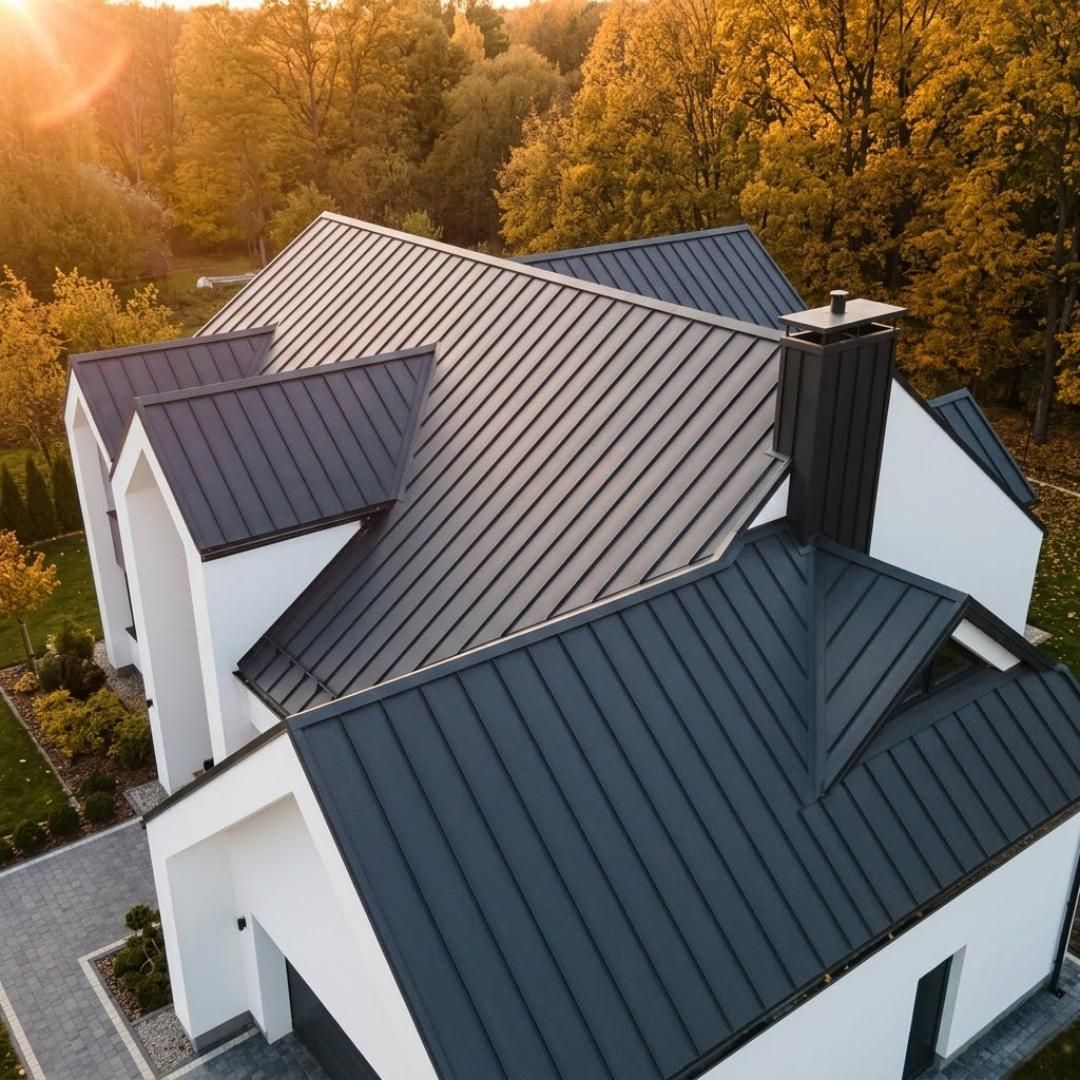
Standing seam metal roofing systems provide a clean, modern look with superior weather resistance and low maintenance requirements. Concealed fasteners, panels that shed snow, and a roof commonly expected to last 40 years or more.
Why Standing Seam Works in Montana
A standing seam roof is made of long panels that run from the eave to the ridge in one piece. Where two panels meet, their edges rise into a raised seam, and the clips that hold the panels down are hidden inside that seam. Nothing punctures the face of the roof.
That design answers most of what Western Montana throws at a roof:
- No exposed screws. Exposed screws and their rubber washers are the most common source of metal roof leaks as a roof ages. Standing seam doesn't have them.
- It sheds snow. Smooth, uninterrupted panels let snow slide instead of loading the roof, which also means fewer ice dams.
- It moves with the temperature. Metal expands in summer sun and shrinks on a subzero night. Clips let the panels slide slightly as they do, instead of working screw holes loose.
- Snow guards clamp to the seams, so they can go where they're needed without new holes in the roof.
- It lasts. Standing seam is commonly expected to last 40 to 70 years, with finishes that carry their own manufacturer warranties.
It's also the look most people have in mind when they picture a modern metal roof: clean vertical lines on everything from mountain homes to farmhouses.
What's Included
Planning
- An on-site look, measurements and an itemized written quote
- A recommendation on seam type, panel width, gauge and finish for your roof
- A snow guard plan: where sliding snow would land and how to hold it
Installation
- Deck check and repair where needed, or tear-off on a replacement
- High-temperature underlayment and ice-and-water membrane at eaves, valleys and penetrations
- Panels fastened with concealed clips
- Flashing at chimneys, walls, vents and skylights, plus eave, rake and ridge trim
- Vented ridge where the attic needs it, and clamp-on snow guards
After
- Cleanup and a walk-through of the finished roof, with the manufacturer's paperwork on the panels and finish
Seam Types, Gauge and Finish
Mechanically seamed vs snap-lock
| Snap-lock | Mechanically seamed | |
|---|---|---|
| How the seam closes | Panels snap together by hand | A seaming tool folds the seam closed on the roof |
| Typical use | Most residential roofs with a moderate or steep pitch | Lower slopes, long panel runs and roofs that need the tightest seam |
| Trade-off | Faster to install, lower cost | Stronger, more weather-tight seam, higher cost |
Both are true standing seam roofs. Which one your roof needs depends mostly on its pitch and the length of the panels.
Gauge
Gauge is the thickness of the steel; the lower the number, the thicker the panel. Residential standing seam is most often 24 or 26 gauge. Thicker panels resist dents from hail and foot traffic better and cost more. We'll recommend a gauge for your roof and the exposure it has.
Finish
Most standing seam panels are painted steel with a factory finish designed to resist fading and chalking. Lighter colors reflect more summer heat; darker colors can help snow let go a little sooner. Finish warranties come from the panel manufacturer, and we'll go over the one for the product you choose.
Oil-canning
Oil-canning is a slight waviness you can sometimes see in the flat part of a panel. It's cosmetic, not a leak or a defect in the roof's performance. Striated or ribbed panels, the right gauge and a flat deck all reduce it.
What It Costs
Standing seam is the premium metal roof. Missoula-area cost guides put it at about $9 to $12 per square foot installed (Homeyou), and a basic 1,500-square-foot standing seam roof at about $9,900 to $15,600 (Homeblue). Your price depends on:
- Seam type and gauge. Mechanically seamed and thicker panels cost more.
- Panel length and roof shape. Long, simple roofs go faster than roofs with many valleys, hips and dormers.
- Tear-off and deck repair on a replacement.
- Snow guards, ventilation and trim.
Your written quote itemizes each one. If you're also weighing corrugated, we'll price both.
How It Works
- Request a quote
Call, email or send the short form. Tell us what the building is, roughly how big the roof is, and what's on it now. Photos aren't needed; we'll see it in person.
- On-site look
We measure the roof and check the parts you can't see from the ground: the decking, the flashing around chimneys and vents, the valleys and the ventilation. That's what decides whether the old roof has to come off.
- Written quote
You get an itemized quote with the panel profile, gauge, color and snow-retention options we recommend, and what each choice does to the price. Take your time with it.
- Install and clean up
Once you approve it, we schedule the work around the weather, install the roof, and clean up the site when we're done, metal scraps and screws included.
Questions About Standing Seam
Is standing seam worth the extra cost over corrugated?
On a home, usually. There are no exposed screws to maintain, the roof moves better with temperature swings, and it looks cleaner. On a shop, barn or outbuilding, a well-installed exposed-fastener roof is often the better value.
Where do I need snow guards on a standing seam roof?
Anywhere sliding snow would land on something: over doors, decks, walkways, driveways, lower roofs and gas meters. Guards clamp onto the seams, so they can be added later too, but it's easiest to plan them with the roof.
Can standing seam go on a low-slope roof?
Some mechanically seamed systems are rated for low slopes that exposed-fastener panels can't handle. Each system has a minimum pitch from its manufacturer, and we check your roof against it.
Will a standing seam roof rust?
The steel is coated with a metallic layer and a factory paint finish that protect it. Scratches through the finish and cut edges are where corrosion starts, which is why careful handling and proper trim matter during installation.
Serving Missoula and Nearby Towns
We install standing seam roofs throughout Missoula and in the towns around it, including:
Missoula Area
Bitterroot Valley
Mission Valley & Flathead
Ready for a Roof That Sheds Snow and Lasts?
Tell us about your building and we'll set up a free, no-pressure metal roofing quote.